
Every fall, the same conversation happens in HR offices and ownership meetings across the country: the renewal comes back, and it's higher again. Often significantly higher. Employers are left with two bad options — absorb the increase and squeeze the budget, or shift more of it onto employees and watch morale, and retention, take the hit.
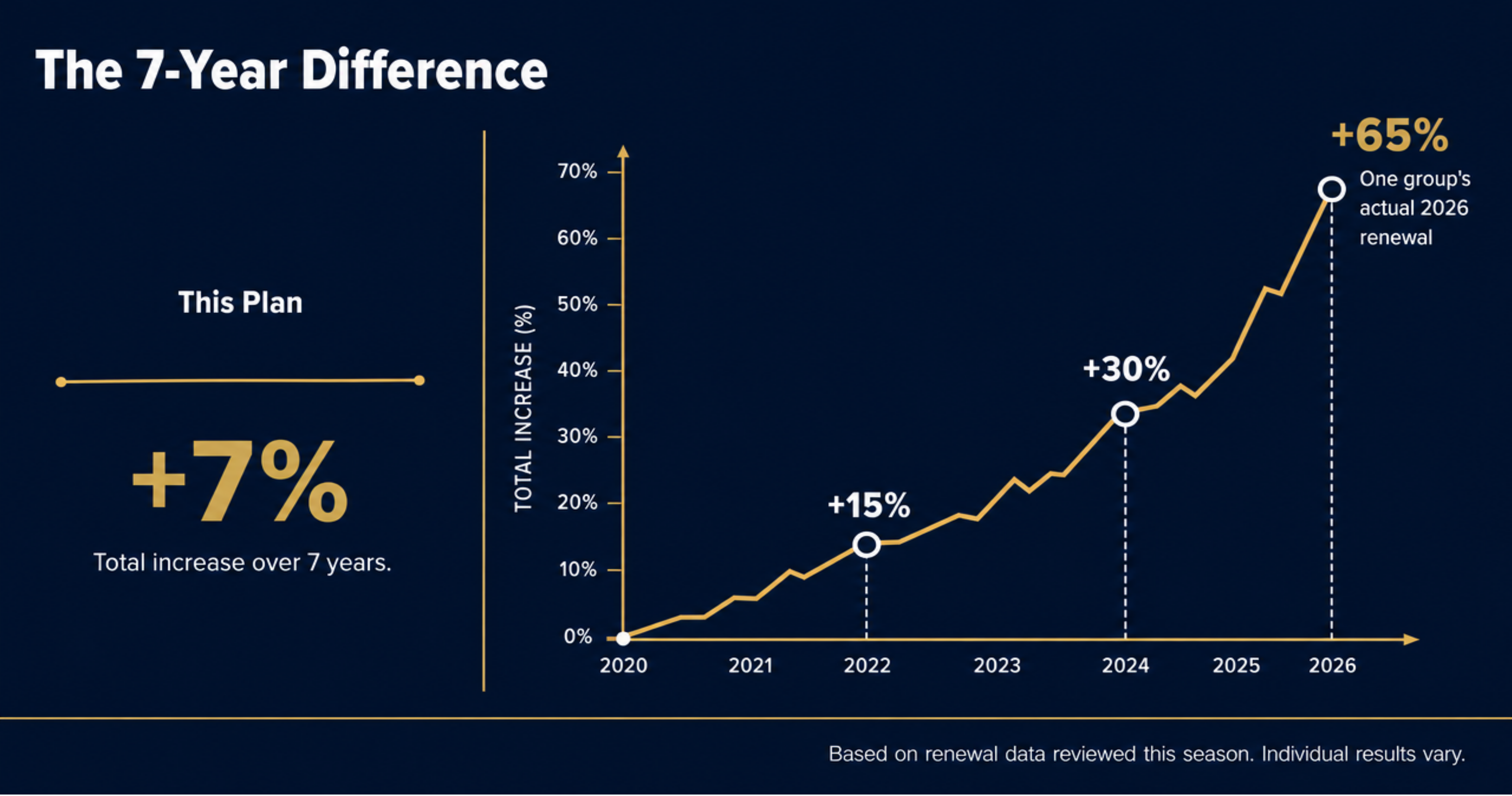
This year, the renewals we've reviewed have run anywhere from 15% to 30% higher — one group saw 65%. There's a different plan available that has increased a total of 7% over the last seven years combined, and it's already priced 15–30% below what a comparable major medical plan typically costs. That's before anything else gets added to it.
Start With the Plan Itself
This isn't a stripped-down plan competing on price by cutting coverage. It's a full major medical PPO — copay and HSA-style designs across a full range of deductible and out-of-pocket structures, guaranteed issue, no health questions, available to any group of five or more employees. It stands on its own, with no add-on required to get the lower premium.
What makes the pricing possible is a track record most carriers can't match: a combined 7% increase over seven years, against a market where 15–30% single-year increases are common this renewal season. That's not a promotional rate that spikes at year two. It's a plan that has actually held its trend line.
7% total, over 7 years
vs. 15–30% single-year increases seen across the market this renewal season
Why the Trend Stays This Flat
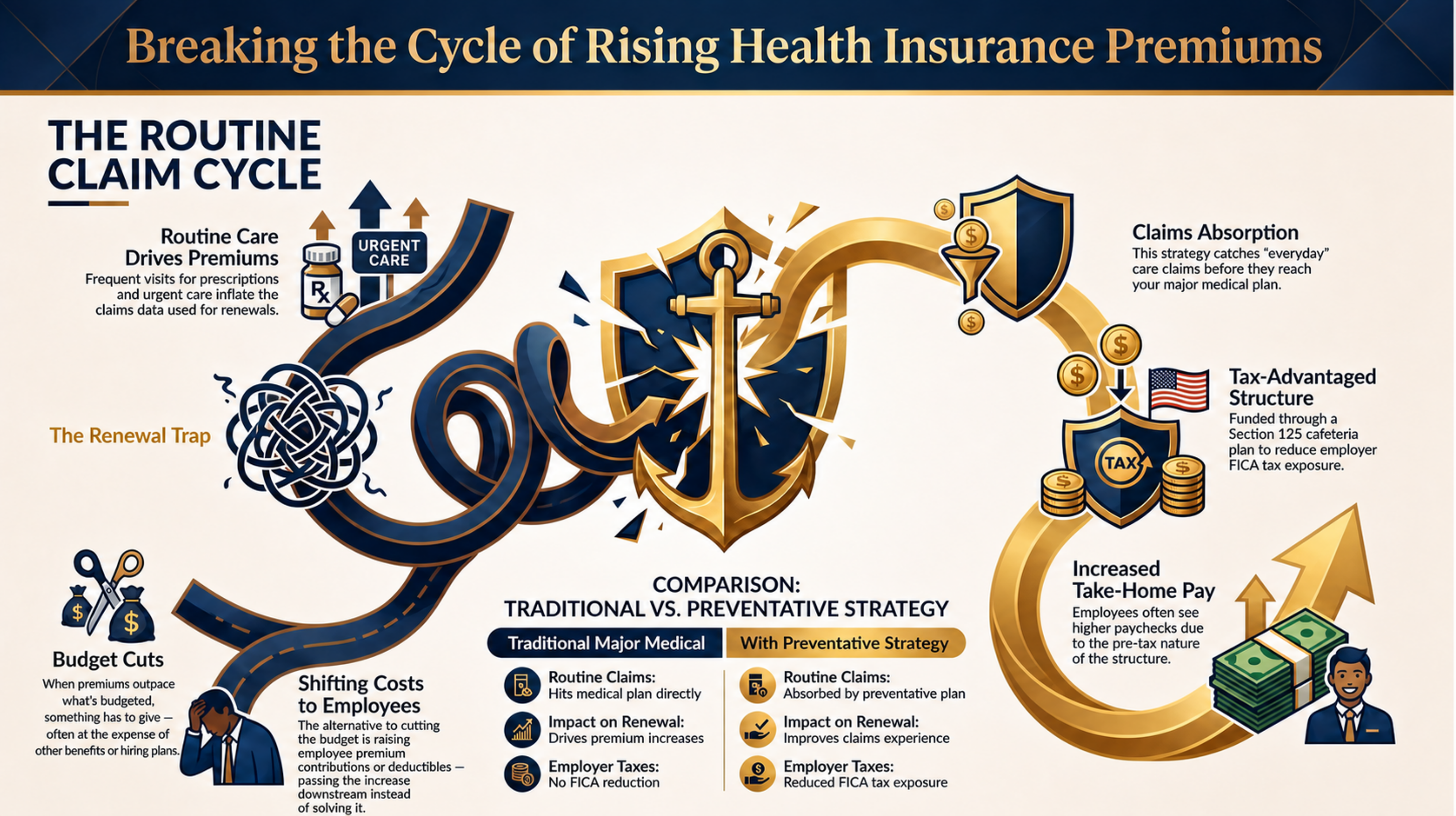
Major medical premiums are priced on claims experience — what the plan actually pays out. The majority of claims in any given year aren't catastrophic. They're routine: primary care, urgent care, prescriptions, mental health visits, and ACA-mandated preventive care like annual wellness visits and screenings.
A preventative benefits strategy can be layered on top of this plan — and it works because it fully duplicates the ACA-mandated preventive care requirement, rather than sitting beside it. Because it independently satisfies the same coverage requirement, it can absorb that entire category of claims — the visits that make up the bulk of a workforce's utilization in a normal year — before they ever reach the major medical plan. Fewer claims hitting the plan is what keeps the plan's own trend this flat.
"The plan is already priced below market on its own. Adding the preventative layer is what keeps it that way, year after year."
The Added Layer: A Preventative Strategy
The preventative strategy can also stand alone — some small businesses use it just to satisfy the ACA preventive mandate for employees. But paired with the major medical plan, it does more:
- Lower employer payroll tax exposure. Because it's funded through a Section 125 structure, a business with 100 enrolled employees can save roughly $57,360 a year in payroll tax alone just by adding it — no change to the underlying health plan required.
- Increased employee take-home pay. The same pre-tax structure typically raises what employees see in their paycheck, even after the new benefit deduction.
- A calmer major medical trend going forward. By absorbing the routine, high-frequency claims, it keeps utilization — and therefore renewal pressure — lower over time.
This isn't a fringe idea. It's significant enough that a major national payroll provider has built direct integration for it into their payroll platform.
Two Ways to Use This
There are two different starting points, depending on how much you're willing to change this renewal season:
- Keep your current plan, add the preventative layer. This doesn't touch your existing carrier or network at all. You get the payroll tax savings, the increase in employee take-home pay, and — because routine claims start getting absorbed by the preventative layer instead of your current major medical plan — a real shot at slowing down the size of your future renewal increases. No disruption, no re-enrollment into a new network.
- Replace your current plan with this one, plus the preventative layer. This is where the bigger, immediate shift shows up: a premium priced roughly 30% below current market rates from day one, on top of the same payroll tax savings and the same slower trend going forward. It can also replace an existing group plan mid-year, so you're not stuck waiting for your renewal date to make the change.
Both paths produce the ongoing tax savings and the calmer trend line. The difference is whether the savings show up only in the years ahead, or immediately in this year's premium as well.
Why This Matters Right Now
Open enrollment is when employers either lock in another year of the same pattern, or actually change what's driving the cost. Whether that means adding the preventative layer to an existing plan or moving to this plan structure entirely, it's worth evaluating before, not after, this year's renewal is finalized.
This article is intended for general informational purposes and does not constitute a guarantee of savings, tax outcomes, or plan performance. The payroll tax example assumes a business with 100 enrolled employees and typical participation; actual results vary by census, wages, payroll structure, and plan design. Consult a licensed benefits, tax, or payroll advisor before implementation.